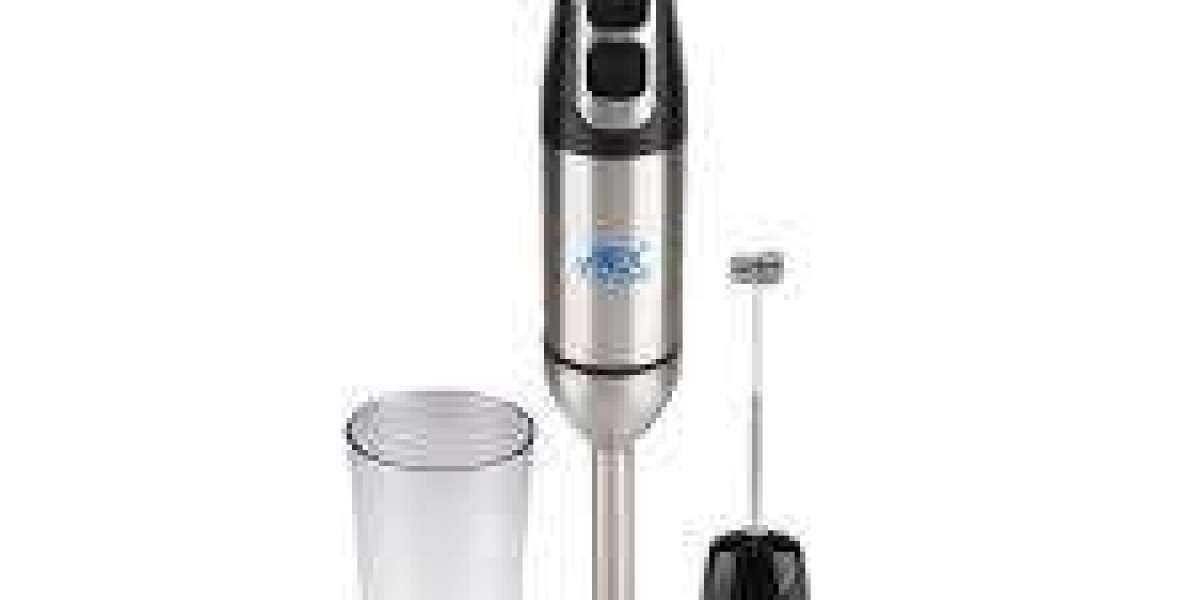
In many kitchens today, a hand blender stands out as a surprisingly powerful but understated tool. Compact, easy to store, and remarkably versatile, the hand blender brings together multiple kitchen tasks in a single appliance. Rather than juggling bulky mixers, food processors, and blenders — each with their own space, cleaning hassle and setup — a hand blender does it all with a simple plunge. It offers a kitchen‑friendly way to blend soups directly in the pot, whip up smoothies, sauces, dressings or even puree baby food. The convenience it offers can shift how you approach everyday cooking: faster prep, fewer dishes, and more time to enjoy meals rather than stress over them.
When you browse the hand‑blender collection of a brand like Anex, you realise that “kitchen helper” doesn’t need to be a bulky appliance taking up huge storage. With models like the AG‑146, AG‑129, and AG‑145, Anex brings performance, durability, and ease — packaged in compact form. These are kitchen appliances built with modern homes in mind, especially where space is limited or where cooking is frequent yet simple.
Why a Hand Blender Is Often Better Than a Traditional Blender for Everyday Cooking
Traditional blenders and food processors have their place — but for many everyday tasks, a hand blender delivers several unique advantages that make it a go-to choice:
Because it’s small and lightweight, a hand blender is extremely easy to handle, even with one hand. The ergonomic design matters: if a blender is heavy or awkward, cooking becomes tiring or inconvenient. Hand blenders avoid that difficulty altogether.
Instead of transferring hot ingredients (like soups or sauces) to a separate blender jar — risking spills or cooling — a hand blender lets you blend right in the pot. That saves time, reduces cleanup, and makes working with hot liquids much safer and easier.
Cleaning up is simpler. Most hand blenders — including many from Anex — have detachable blending shafts (the metal foot) which can be rinsed or washed separately, often even dishwasher‑safe (motor housing excluded). No more washing multiple jars, lids, blades, and accessories like with traditional blenders.
They’re versatile. Beyond smoothies and shakes, a hand blender can help puree soups, make sauces, whip cream or eggs, create dips or dressings, and even help when preparing baby‑food or small batches. Its multipurpose nature often replaces several appliances for many households.
For smaller kitchens or homes where counter space is limited, a hand blender is a space‑efficient choice. It slips into a drawer or cabinet and doesn’t clutter the kitchen when not in use — unlike bulky countertop blenders.
Because it’s quick to use, blend, rinse, and repeat — it encourages healthy, homemade cooking. Whether you’re whipping up a quick smoothie, blending a pot of soup after lunch, or mixing a sauce for dinner, the convenience often means you’ll use it more frequently.
About the Anex Hand Blender Range — What Makes It Stand Out
Anex presents a variety of models in their hand‑blender collection, built for different needs. A few examples speak to this diversity:
Anex AG‑146 Deluxe Hand Blender — A robust model with a powerful 1000 W motor and titanium‑coated stainless steel blade. The stainless‑steel foot is suitable for both cold and hot ingredients, making it great for soups, sauces, shakes, and more. It comes with a 2‑year warranty, and all detachable parts (except motor housing) are dishwasher safe.
Anex AG‑129 Deluxe Hand Blender — A versatile 800 W model, offering variable speed control and a stainless‑steel blending stem that can handle boiling liquids. It’s designed to whip up milk‑shakes, sauces, soups, or even beat ingredients as needed.
Anex AG‑145 Deluxe Hand Blender — Another capable unit with 1000 W power, designed for everyday kitchen tasks like blending sauces, soups, milk‑shakes, and mixtures. Its stainless‑steel foot and durable blades aim to offer long‑term performance.
These models reflect the core benefits of hand blenders: compactness, power, easy cleaning, and suitability for hot or cold ingredients. Whether you’re cooking simple lunches, blending soups, or experimenting with sauces — Anex’s range promises reliability.
How a Hand Blender Changes Cooking Habits — Everyday Kitchen Life Made Easier
Having a hand blender at hand can subtly but deeply change how you cook and what you cook. With minimal setup and cleanup, recipes that once felt like a hassle become routine. Soups and sauces that used to be Sunday‑only projects can now be weeknight staples. Leftover vegetables or boiled ingredients can be quickly transformed into purees or dips.
Because you can blend directly in the pot, there’s less mess, fewer utensils to wash, and a smaller chance of spills — which is especially useful when dealing with hot food. The speed and convenience also make healthy homemade meals more achievable. A nourishing soup, a fresh chutney, a creamy hummus — all with minimal fuss.
For small households or busy kitchens, the hand blender’s compactness and storage‑friendly design make it an appliance you’ll actually use. No need to dedicate much space, no bulky jars to clean or store. It becomes part of everyday cooking rather than a “special‑occasion” tool.
If you cook with varying textures — say thick sauces, smooth soups, or chunky dips — a hand blender offers control. You can blend just enough to get a creamy texture or leave some chunkiness depending on your taste. Unlike full‑size blenders that often puree everything uniformly, hand blenders give you flexibility.
Finally, for climates or households where quick meals are necessary — maybe after work, with family, or in apartments — this tool simplifies the process. What once took multiple appliances, time, and effort becomes a quick flick of the wrist and minimal cleanup.
What to Look For When Buying a Hand Blender — Choosing Wisely
When selecting a hand blender, there are a few important features that can make a big difference in daily use. First is power: a motor with enough wattage ensures smoother blending, especially for thicker mixtures or hot soups. For example, Anex’s 800 W and 1000 W models tend to offer better performance than low‑power units.
The blending shaft and blade material also matter. Stainless steel — ideally with a strong coating like titanium — provides durability and allows blending both hot and cold ingredients. A long blending shaft helps handle deeper pots without splashing, which is particularly useful for soups or large batches.
Ease of cleaning and maintenance is another key factor. Detachable shafts, dishwasher‑safe parts (except the motor housing), and easy‑to‑disassemble components save time and effort after cooking. A well‑designed blender ensures you actually use it often instead of letting it sit in a cupboard.
Ergonomics and comfort matter for everyday use. A lightweight unit with a comfortable grip, easy‑to‑access power switches, and stable handling makes blending smooth and reduces wrist strain — especially if you’re blending for a while.
Finally, consider versatility and attachments (if available). Some hand blenders can whisk, chop, or whip — expanding what you can do beyond soups or shakes. Even without extra attachments, having a blender that handles sauces, purees, and drinks efficiently makes it a worthwhile kitchen tool.
Frequently Asked Questions (FAQs)
Is a hand blender enough — or do I also need a regular blender or food processor?
A hand blender is ideal for soups, sauces, smoothies, dressings, dips, and smaller‑batch tasks. For heavy-duty tasks like grinding large quantities, crushing ice for long periods, or processing hard ingredients (nuts, grains), a full-size blender or food processor may still be useful. Hand blenders excel in convenience, but they have their limits.
Can I use a hand blender with hot soups or boiling liquids?
Yes — especially models with stainless‑steel blending shafts designed for heat resistance. Many units from Anex (like AG‑129 or AG‑146) explicitly mention they are suitable for hot liquids. This makes them safer and more convenient than transferring hot soup to a separate blender.
Are hand blenders difficult to clean?
On the contrary — cleaning is usually much easier than with regular blenders. Most hand blenders have detachable shafts that can be rinsed under water or placed in a dishwasher (motor housing excluded). This simplicity makes them excellent for quick, everyday cooking.
What dishes or recipes work especially well with a hand blender?
Soups, sauces, milk‑shakes, smoothies, salad dressings, creamy dips, mashed or pureed vegetables, baby food — these are all great for a hand blender. It’s also useful for quick whisking or blending tasks where a full blender feels like overkill.
Is a hand blender suitable for small kitchens and daily cooking?
Absolutely. Because of its compact size, easy storage, quick use, and convenience, a hand blender is a great choice for small kitchens, apartments, or anyone who cooks daily but wants minimal fuss and maximum flexibility.
Final Thoughts — A Small Appliance with Big Impact
Hand blenders, though compact and simple, can transform home cooking. They make blending, pureeing, sauces, soups and shakes effortless — eliminating the need for bulky appliances, complicated cleaning, and extra storage. For many households, a hand blender becomes the silent kitchen companion that simplifies daily cooking and encourages healthy, homemade meals.
Anex’s hand blender collection captures exactly this value: reliable power, durable materials, compatibility with hot or cold ingredients, easy cleaning, and versatility. Whether you’re a cooking enthusiast, a busy parent, or someone who hates kitchen clutter, a hand blender deserves a spot in your kitchen.