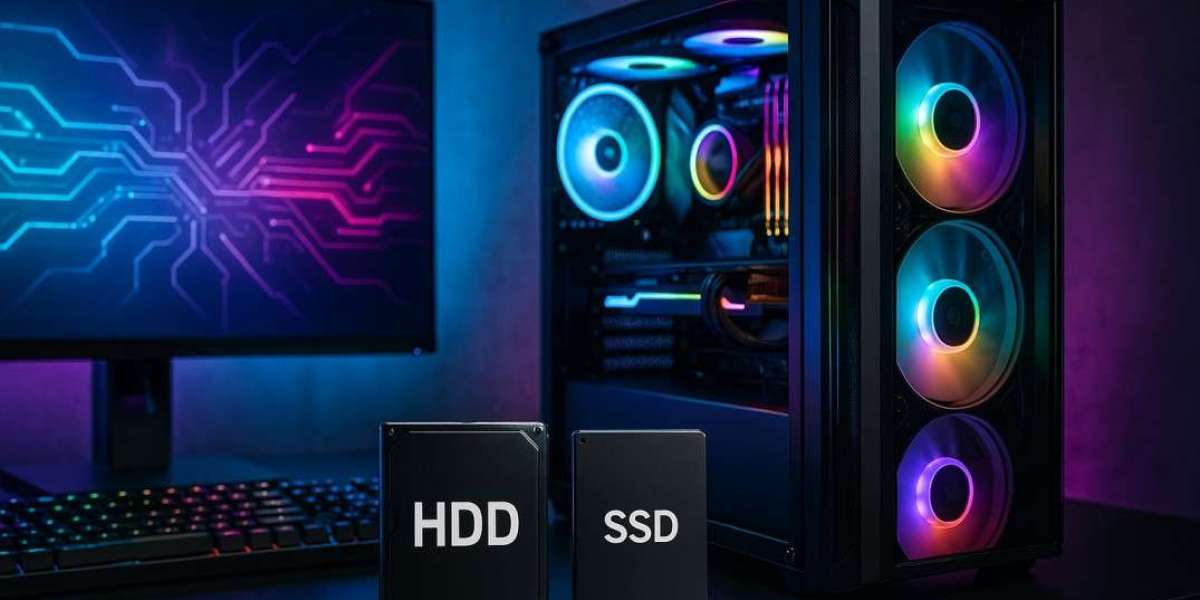
Recommended Storage for a Gaming PC: What You Need to Know
If you’re building a gaming PC in Dubai, one of the most important decisions you’ll make is choosing the right storage. Storage affects how fast your system boots, how quickly games load, how smoothly gameplay runs, and how many titles you can keep installed at once. Modern games are huge, often reaching 100 GB or more, so having the right storage setup is essential.
Why Storage Type Matters
The Seagate article explains the performance differences between SSDs and HDDs. SSDs (solid-state drives) are much faster because they have no moving parts. They offer quick boot times, fast loading between game levels, and smooth performance overall. If you prefer responsive gameplay and minimal waiting, SSDs make a noticeable difference.
HDDs (hard disk drives) are slower, but they offer far more storage space for the price. They are useful for storing large game libraries, especially games you don’t play often. HDDs are also ideal for media files, backups, and archives since capacity matters more than speed in those situations.
Choosing Storage Based on Your Gaming Style
Your gaming habits play a major role in deciding how much storage you need:
- Occasional gamers who play only a few titles can manage with a 500 GB to 1 TB SSD.
- Moderate gamers who maintain a small library benefit from 1 TB to 2 TB of mixed storage.
- Enthusiast gamers who frequently download and install multiple titles may need 2 TB to 4 TB of storage to avoid constant uninstalling and reinstalling.
- Professional or heavy gamers generally need 4 TB or more, often combining SSDs for speed with HDDs for massive capacity.
These ranges help you select storage that matches your usage instead of overspending or struggling with limited space.
Why a Dual-Drive Setup Works Best
One of the key recommendations from the article is to use both SSD and HDD together. This gives you the advantages of both speed and capacity. You can install your operating system and your most-played games on an SSD for fast performance, while keeping the rest of your library, media, and backups on an HDD.
A dual-drive setup ensures smooth gameplay where it matters and enough space to grow your collection without constantly shuffling files.
Planning for the Future
Since game file sizes continue to increase year after year, it’s smart to plan ahead. The article suggests choosing a motherboard with extra M.2 slots or SATA ports so you can easily add more storage later. It also helps to ensure your PC case and power supply can accommodate multiple drives. Planning for expansion prevents future headaches and keeps your PC flexible as your library grows.
Tips for Managing Your Game Library
A few practical steps can help you get more out of your storage:
- Keep your most frequently played games on the SSD.
- Move older or rarely played games to an HDD.
- Use external drives if you need temporary extra space or want easy backup options.
- Clean up your library occasionally by removing games you no longer play.
Final Thoughts
The article emphasizes that storage is a crucial part of any gaming PC build. Whether you’re a casual player or a dedicated gamer with a large library, choosing the right combination of SSD and HDD makes your system faster, more efficient, and easier to use. With the right setup, you’ll enjoy smoother gameplay, shorter load times, and plenty of room for the games you love — now and in the future.